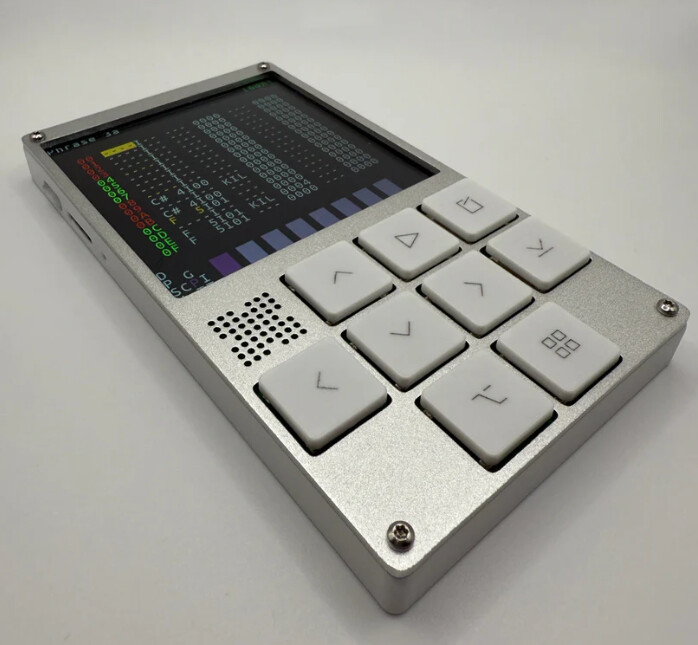
Looking slick imo, though a bit weird maybe with the button layout . Gas is definitely activated, though at the moment I can’t justify a 450,- dollar purchase, also knowing I have a hardly touched polyend tracker here that needs more love. If in the future the price can come down, perhaps with a cheaper Nerdseq portable as direct competition a better choice can be weighed.
If I was more into chiptune stuff (lol, I use a Tracker as my main daw and don’t really mess with Jungle/chiptune/DnB all that much) I would be way more interested. form factor and general looks are great. If I got anything it would probably be the Polyend. Ultimately, though, I have Renoise on a fairly portable laptop with a bunch of VSTs that make all the sounds I like, along with a Rolend R-26 Field recorder, so really I have a hard time justifying the purchase of a Polyend or M8.
I read the manual and I’m not sure if I should buy into this because there are only 256 phrases (patterns with 16 steps each) for making a whole 8-track song. I’m sure I would run out of phrases … What do you think?
Saying that the dirtywave is just for chiptune would be an understatement , it is far more capable then the polyend (which also has lots of quality issues )
Dirtywave has mutable instruments macro fm synth algo’s , fm stuff etc qualityhousing , mechanical kailh switches etc…iow .it surpasses the polyend in both, build-sound quality and features .
That’s a fair point, certainly now after the M8 is “fully” developed. Though, when it was first coming around virtually everything I saw on it was, “hey, look at this chip-tune synth that’s inspired by chip-tune synths,” so at first glance I saw it as mostly a chip-tune type of device.
I rescind my previous view of the M8 as primarily a chip-tune synth. It certainly turned into quite a bit more. I will also point out that I hilariously countered my own argument of the M8 being a chip-tune synth in the very first sentence of my original post.
Cheers to the M8 for being a capable and unique device. (I still think the polyend tracker is neat, though. And Renoise with VSTs on a portable computer makes more sense in my use-case.) It’s pretty awesome that there are multiple options with varying capabilities and price-points available to us.
What you’re describing is just conformation bias .
Right from the start the dirtywave had a great feature set .
I don’t see anyhting in the polyend tracker that even remotely interest me , a user interface which is nearly not as good as a dedicated mechanical keyboard + laptop running renoise .
My 2 cents
Yes, as elucidated in the second sentence of my post. In defense of that bias, early marketing and buzz surrounding the M8 was heavily skewed towards its 8-Bit engine from what I saw at the time, though again, I wasn’t paying that close of attention beyond aesthetic and form factor (which I praised from the start). Bias doesn’t form in a vacuum.
Agreed, sans mechanical keyboard currently as I rather like the switches in my laptop’s keyboard. I extend the sentiment to the M8, as well, though that certainly has a lot to do with being biased towards Renoise due to familiarity with the interface and the ability to significantly extend its functionality through Tools and Plug-Ins.
Bump in 2026: now that the Dirtywave M8 can do microtiming and per instrument EQ, compression and clipping, it’s becoming more interesting to me. Anyone own one? How is working with it? Are the differences / limitations compared to Renoise annoying or do you find they’re not a problem in practice?
I’m thinking of treating myself to one simply because I can, but I wonder if I would actually enjoy using it more than Renoise.
I have one and I love it. Working with it is surprisingly intuitive. I’ve said this before and I’ll continue to say it until Dirtywave makes a bad decision, but the M8 is a shockingly well thought out piece of gear.
For me it is all about context and adjusting expectations. Renoise is way more powerful than the M8. When I work with the M8, I go in with this staggering difference in mind, just like how I would behave one way at a church, and another at a pub. These limitations are, imo, 100% things that a user has to learn to manage and adjust to - if they want to; the responsibility is in the user’s hand.
I don’t have the original, but have the second best thing imo with the headless version. You’ll need a compatible device, a teensie board and some setting up, BUT it’ll save you a few bucks compared to buying an original. If you’re as lazy as me you can probably also find a secondhand already pre-set up headless version .
It is a completely different way of tracking and not really comparable to creating in Renoise. I’d advice you to check a bunch of tutorials first, then get a headless and maybe if it sticks you’ll invest in the original?
For me it is more a vacation device. I’ve found that I need a proper keyboard & monitor for longer music making sessions. With the handhelds my hands cramp and my neck will strain, old man issues maybe
only up to 3 note FX per note (which can be expanded using tables, but I won’t get into that)
sampler can only host a single sample
modulation, delay, and reverb effects as global sends only (no inserts)
although each instrument has it’s own EQ, there are no other mixing effects per track
master compressor/limiter only
the machine streams all samples from the SD card. while I’ve never encountered any problems with that yet, it is something to be aware of, and it is usually recommended to use 16-bit mono samples to avoid issues
I sometimes use the last of the tracks, track 8, as a master track for tempo automation and other more global tweaks, and that limits me to only have 7 tracks for music
I sometimes have to sacrifice several tracks to get something polyphonic
a phrase (think pattern) is made up of 16 note rows and cannot be expanded, but a user can chain up to 16 16-note phrases
Totally, and it’s up to the user to use it solely as a “vacation device” or to push it hard and make more than just beats with it. The M8 is a well thought out machine and while it has its limitations, a user with enough imagination and dedication can express themselves musically without any issue.
To clarify - I wasn’t trying to say you can only make “beats” on it, that’s just what I’ve tended to do with mine so far, because of my own limitations more than the M8s.
I have the M8,rarely use it atm, unfortunately the resolution is just too low for my needs when making beats,also using different time signatures in it is a pain in the face.The old tracker pattern system it uses is amazing though,I really like its workflow,also the ticks per line is a beast for wonky rhythms
There is also an earlier diy cheaper version, though firmware updates and related stability is an ongoing thing. Not sure about the advance, but it doesn’t feel finished yet.
Yeah, I saw that. It’s pretty expensive for what it is, imho. M8 is of course even more expensive, but it’s also much more polished. At $350 might as well save a little more for the real thing.
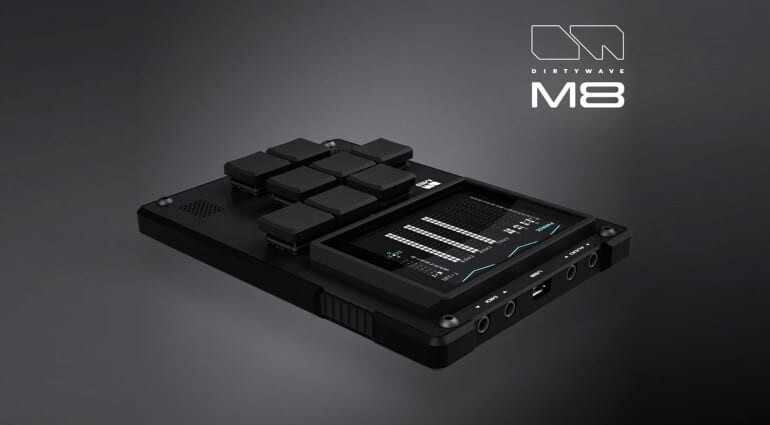
 . Gas is definitely activated, though at the moment I can’t justify a 450,- dollar purchase, also knowing I have a hardly touched polyend tracker here that needs more love. If in the future the price can come down, perhaps with a cheaper Nerdseq portable as direct competition a better choice can be weighed.
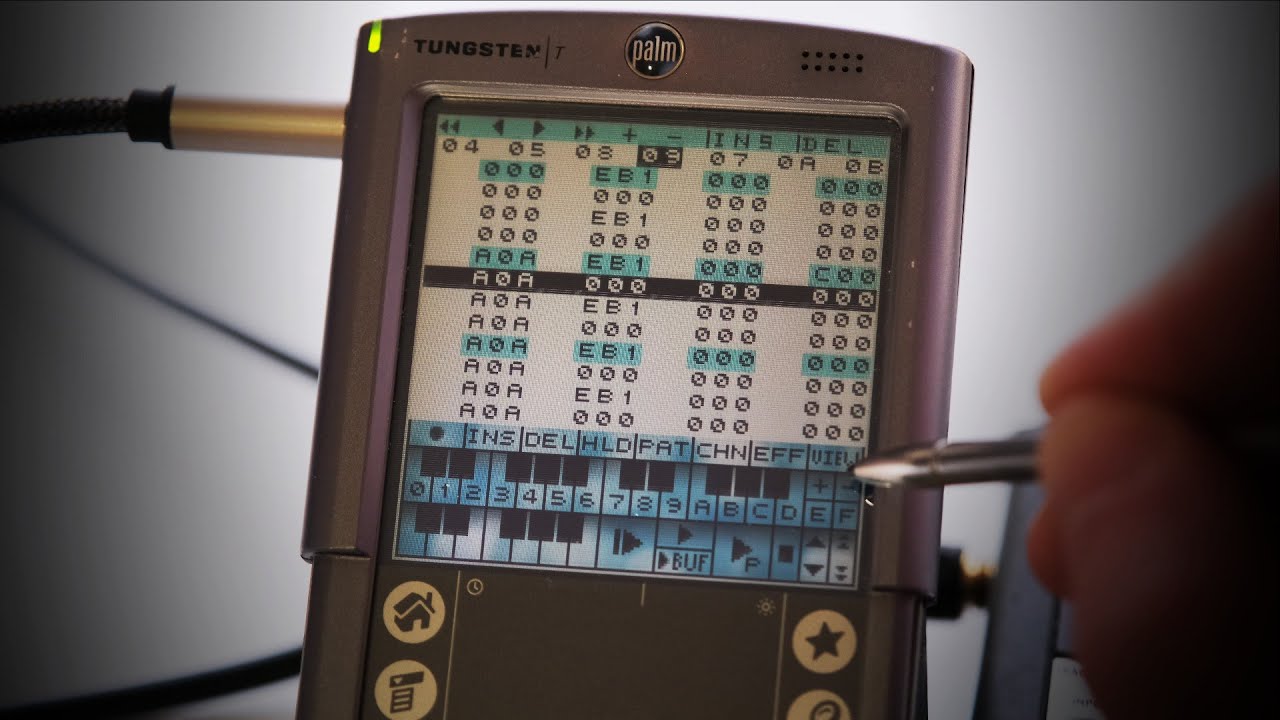
 In defense of that bias, early marketing and buzz surrounding the M8 was heavily skewed towards its 8-Bit engine from what I saw at the time, though again, I wasn’t paying that close of attention beyond aesthetic and form factor (which I praised from the start). Bias doesn’t form in a vacuum.