Advocating for native gamepad support in Renoise. Existing external methods have large drawbacks, while the ability to run Renoise on Raspberry Pi and Steam Deck makes the native solution highly desirable.
Advocating for native gamepad support in Renoise. Existing external methods have large drawbacks, while the ability to run Renoise on Raspberry Pi and Steam Deck makes the native solution highly desirable.
I’ve had good results via ReWASD, but it’s commercial software and only supports specific devices.
Native gamepad support would actually be amazing for things like being able to map an analog stick to a XY Pad device. I can also see mapping a filter cut-off to a trigger and riding the trigger for more natural filter sweeps and effects.
So yes, much yes.
I have a lot of experience with this using puredata, maxmsp and other apps like Virtuasonic MIJOY + more.
My experience is mostly in a Windows environment and there are some considerations with any of these methods and apps, and there have been breaking issues over the years that are at the OS and driver level.
Typical issues involve:
Maybe there’s an OSC based solution that can be combined with an external cross-platform OSC background app and a Renoise tool?
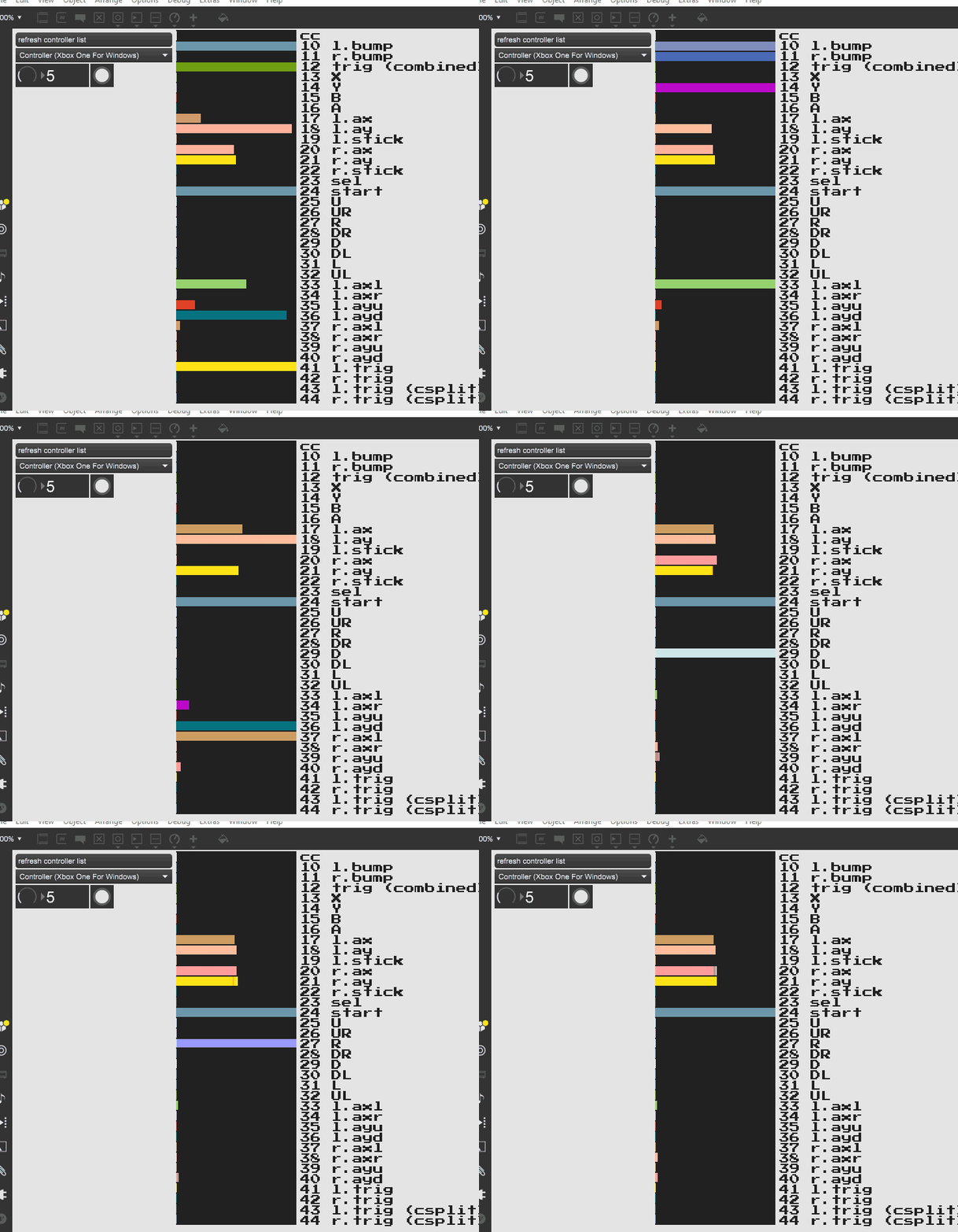
The Steam Deck obviously has more controls than a gamepad. I knew this, but when recording ad-lib you’ll inevitably say things that’re wrong.
The main problem of this approach is related to the fact that the renoise interface does not quite correspond to such control. if you remember lsdj or m8, then all the software was originally built for such control. I like the idea itself, but there are doubts that the development team will go for such radical changes.
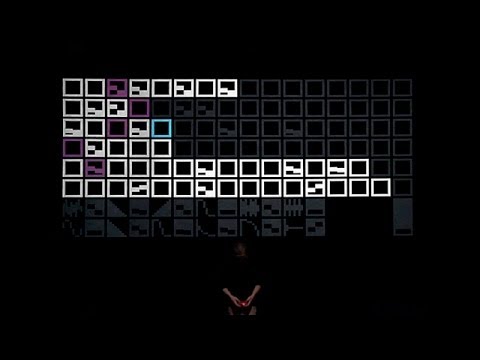
or if you consider it from the point of view of a live performance, then I would see it as something like that.
I thought it would be something relatively easy to implement, but seeing @protman s post, this looks like a hassle supporting. Can something be added to the lua api so scripters can take care of this?
and some emulator support for old games systems 
Could use the xyz axis to control midi ccs and assign to automation parameters.
I want some kind of api or environment in which you can not only control the instruments, but also create your own sequencer, which could be controlled from the gamepad. I do not know how possible it is now in lua, but it would be fun to have the tracker sequencer in the tracker.
Something similar the developer of Elektron did for ableton live
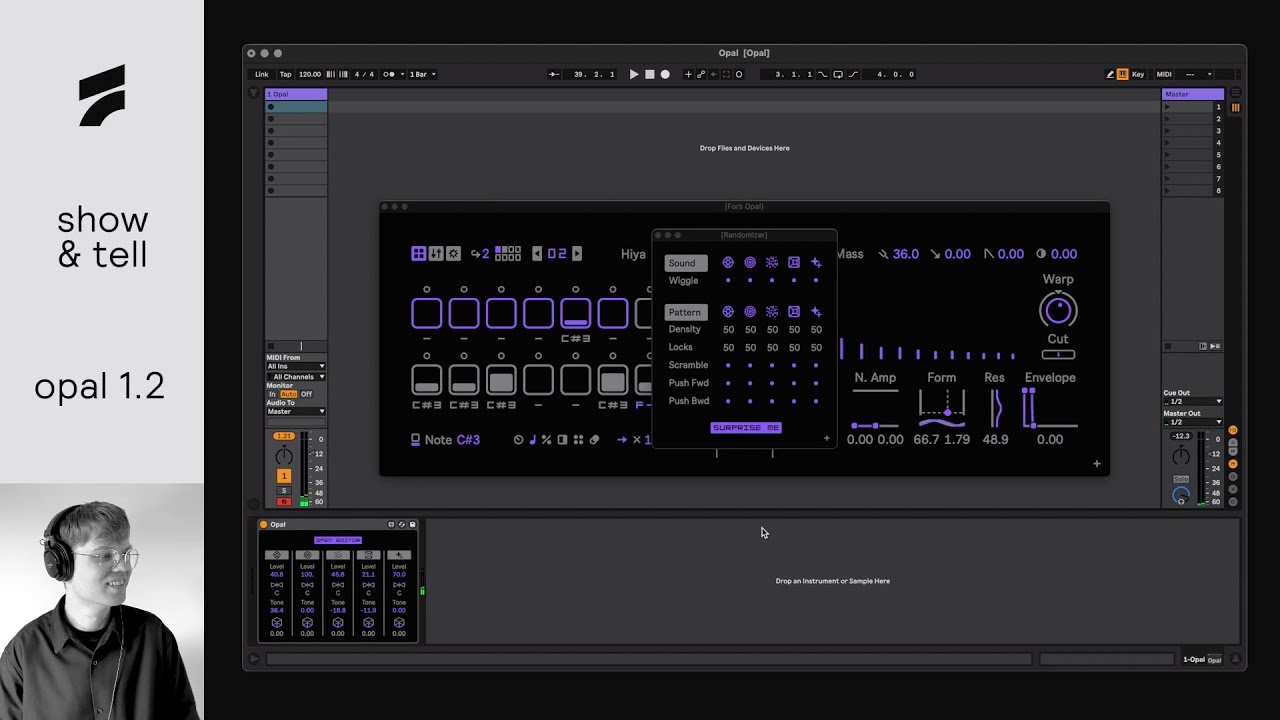
or as an option, you could rethink redux. and add a similar function to it, where it could be handled in the same way in other music applications.
Just installed renoise on to my steam deck. I’m hopeful.
Hi everyone,
Regarding the discussion about native gamepad support for Renoise (especially with the Raspberry Pi and Steam Deck in mind): Going the standard MIDI route with 7-bit (128 steps) is a massive bottleneck for modern parameter morphing, as already pointed out by @Achenar and also leading to audible zipper noise. We need raw, high-resolution (16-bit; Renoise is even doing 32-bit) axis data fed directly into our Meta-Devices (like the Formula Device and XY-Pads) to unlock smooth, expressive control (e.g., using an Xbox Elite Series 2 Controller)
I would love to see this, so I wanted to share my thoughts on it:
Since building a cross-platform gamepad API abstraction (XInput, evdev, Mac APIs) from scratch is a massive, time-consuming nightmare, I would like to propose a highly elegant, lightweight solution: Integrating the orx engine.
Why orx is a perfect fit for Renoise:
1. Shared philosophy (Pure C, data-driven, hyper-fast): Like Renoise, orx is built entirely from the ground up for raw performance and efficiency, utilizing a strict data-driven architecture via INI files. It is written in pure C and brings zero bloat.
2. Minimal footprint: The overhead is practically non-existent. It has a startup/teardown time of about 5ms and a memory footprint of about 600kb, so the resource usage of the integration is neglagible and completely unimpactful to Renoise.
3. True modularity (no graphics/audio overhead): Renoise wouldn’t need to load a heavy gaming framework. Orx is completely decoupled. You can embed just the core input module (which uses a rock-solid, highly-optimized GLFW/GLFW3 backend). The graphics and rendering pipeline remain 100% dormant and consume 0% CPU unless explicitly called.
4. Instant cross-platform abstraction: It automatically handles the gamepad mapping and input layer for Windows, Linux (Steam Deck; Raspberry Pi), and Mac out of the box.
5. The “Trojan Horse” for future UI: As an insane side-benefit, having orx under the hood means Renoise would inherently possess a hardware-accelerated 2.5D graphics engine. Down the road, this could completely revolutionize the Lua-Canvas API, allowing the community to build ultra-fluid, hardware-accelerated 3D/2.5D spectrum analyzers, vector-morphing pads, or custom UIs directly inside the tracker without sluggish performance.
The best part: I am active in the orx Discord, and I am sure that Iarwain, the creator of orx, would love and be fully supportive of this idea. He even made a video tutorial showcasing how incredibly simple it is to integrate orx into other projects (Integration video). He would be more than happy to provide architectural guidance or help if the Renoise devs want to look into integrating it.
It’s small, it’s lightning-fast, it’s deterministic, and it solves the fragmented controller problem permanently with full 32-bit precision.
Being aware that integrating such features directly into the code-base can be challenging, especally because of cross-platform support, complicated integration and maybe even the concerns of bloated libaries. The latest version of Renoise has Lua support, so it could also be feasable to use the FFI of Lua to integrate orx but that would add another layer of abstraction compared to a direct integration into the core of Renoise.
What do you think?
@taktik I wanted to tag you directly on this architectural overview since it specifically aims to address the cross-platform gamepad implementation (and people even mentioned Steam Deck and Raspberry Pi ports) without introducing heavy library bloat. Let me know if you’d like to take a look at the integration blueprint or chat. Appreciate it!